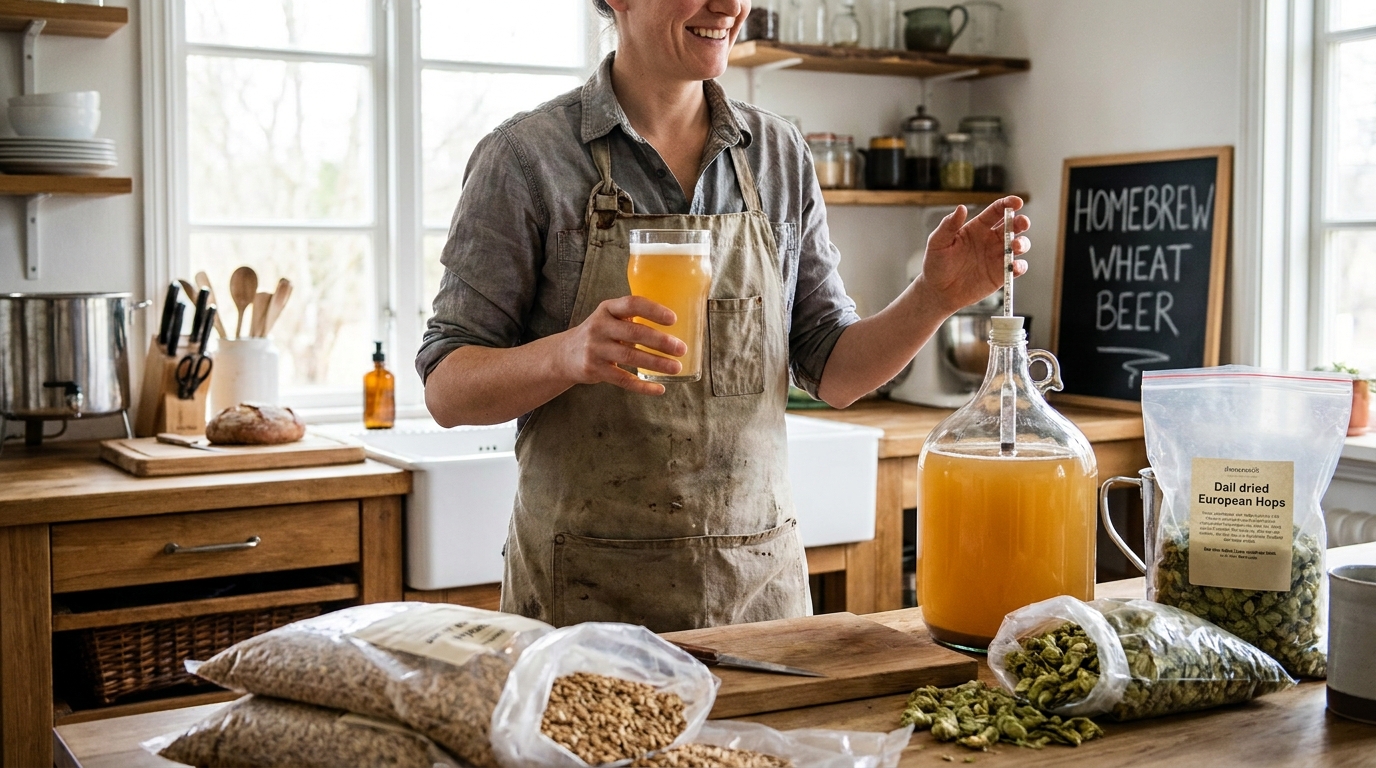
Is there anything quite like the first sip of a cloudy, slightly sweet pint on a scorching summer afternoon? For most of us, wheat beers are the gold standard for refreshment, offering a creamy texture and unique flavors that other styles just can't match. If you are looking to homebrew beers that actually stand out, a wheat-heavy recipe is one of the most rewarding projects you can take on.
Getting that signature profile right involves more than just swapping out some barley. You have to understand the balance between malted wheat and the best European hops to keep the bitterness low while letting the aromatics shine. The real secret, though, usually lies in the yeast, which provides those iconic banana, clove, or citrus notes we all love.
This article covers everything you need to know, from the 30% rule of grist composition to the differences between a Bavarian Hefeweizen and a Belgian Witbier. We will also look at technical tips like using rice hulls to prevent a stuck mash, ensuring your next batch is as smooth to brew as it is to drink.
The Refreshing World of Wheat Beers
There is nothing quite like holding a cloudy, slightly sweet pint on a humid July afternoon. That hazy glow in the glass is more than just a cold drink; it is one of the most approachable yet misunderstood styles in brewing. For homebrewers, wheat beers offer a quick path to a great batch, but they demand respect for one specific ingredient: the yeast. This matters because the right culture transforms a simple grain bill into something world-class.
If you are building a recipe, remember that the grains are only half the story. American wheat beers usually need at least thirty percent malted wheat, but the soul of the beer comes from the fermenter. Using a neutral yeast like Chico might be easy, but you often end up with a basic Pale Ale instead of a true wheat beer. To get those classic Hefeweizen notes of banana and bubblegum, you need specific Bavarian yeast. These strains create those complex flavors naturally without any added ingredients.
Take a look at Allagash White, which has won nine gold medals by mastering the balance of wheat and spice. Whether you are using fancy glacier water or just your kitchen tap, the goal is a refreshing, crushable finish. Once you understand that yeast defines the style, you can stop guessing and start brewing pints that rival your favorite taproom. It is about working with the ingredients, not against them.
Key insights:
- Yeast choice is the main divider between a stylistic wheat beer and a standard pale ale.
- Hefeweizen flavors like banana and clove come entirely from yeast, not additives.
- American wheat beers require a minimum of thirty percent malted wheat in the grist.
Beyond the Clouds: What Defines a Wheat Beer?
What actually makes a beer a wheat beer instead of just a standard ale? It mostly comes down to the grist. To officially join the club, most styles require a grist of at least thirty percent malted wheat. This is not just a technicality for the rulebooks. That wheat content is exactly what creates the signature creamy mouthfeel and that cloudy, refreshing look we love. Even if you are not a huge fan of the style, you might find yourself using wheat malt anyway. Many homebrewers love it because it offers high efficiency in the mash and helps with attenuation, making it a practical choice for the brew house.
If you are looking for a starting point, American wheat beers are often called the gateway of the craft world. They are clean, crisp, and simple to brew. Unlike their European cousins, these beers use neutral ale yeast to keep the focus on the grain. Think of something like the Alaskan Brewing Co. White. They use pure water from a massive ice field to keep things pristine. Because the yeast stays out of the way, you get a straightforward and refreshing drink that is perfect for a summer afternoon. It is the ideal choice for someone who wants the body of a wheat beer without the heavy spice or fruit notes.
On the other end of the spectrum, we have the Bavarian Hefeweizen. Here, the rules change completely. In this style, the yeast is the undisputed star of the show. You might taste notes of banana, bubblegum, or even black pepper, but those do not come from a spice rack. They come entirely from the unique Bavarian yeast strains. One seasoned brewer noted that calling it a wheat beer without style-specific yeast is basically just making a basic Pale Ale. In a Hefeweizen, clarity is actually the enemy. You want that haze because it carries all those complex esters and phenols that define the style.
While we are talking about cloudy beers, we cannot ignore the Belgian Witbier. These take a different path by using unmalted wheat and adding spices like coriander and orange peel. Allagash White is the gold standard here, having picked up nine gold medals for its perfect balance. Whether you want the spicy kick of a Witbier or the clean finish of an American wheat, the key is understanding that the wheat provides the body, but the yeast provides the soul. Choosing the right strain is the difference between a generic ale and a true classic.
Key insights:
- A minimum of 30% malted wheat is required to define the style and achieve the desired creamy texture.
- Yeast selection is the primary factor that distinguishes a Hefeweizen from a standard American wheat ale.
- American wheat beers are considered gateway beers because they use neutral yeast for a cleaner profile.
- Wheat malt is often used by homebrewers to increase mash efficiency and improve beer attenuation.
The American Wheat: Clean, Crisp, and Simple
Think of the American wheat ale as the friendly neighbor of the craft beer world. It is often the gateway brew that turns casual drinkers into enthusiasts because it does not overwhelm the palate with heavy hops or funky yeast. While German styles rely on bold esters, the American version focuses on being straightforward. By using a neutral ale yeast and a grist of at least thirty percent malted wheat, brewers create a profile that is clean, crisp, and easy to drink on a hot afternoon.
This style is really a showcase for pure ingredients and simple execution. For example, Alaskan Brewing Co. takes this to heart by using glacier-fed water from the massive Juneau Ice Field to ensure a pristine finish. When you strip away the spices and heavy yeast character, the quality of your water and grain takes center stage. Some brewers argue that using a neutral strain like Chico makes it feel more like a basic Pale Ale, but that is exactly why it works so well. It is a reliable, refreshing choice that proves you do not need complex additives to make a beer people will love.
Bavarian Hefeweizens: It is All About the Yeast
Ever wonder why a cold Hefeweizen tastes like a bowl of bananas and bubblegum? You might think the brewer tossed in some fruit or candy during the boil, but that is not the case. Those iconic flavors come entirely from unique Bavarian yeast strains. While other styles rely on hops or malts for their personality, this beer lets the fermentation do all the heavy lifting. It is a process where specific esters and phenols create a complex profile without any extra ingredients at all.
This is what separates a true German classic from a standard American wheat beer. In the States, brewers often use neutral ale yeast and a grist of at least thirty percent malted wheat. But as many homebrewers point out, if you use a basic yeast like Chico, you are just making a Pale Ale with some wheat in it. To get it right, you need that specific Bavarian strain. It is the defining factor that turns a simple grain bill into something legendary.
One thing to remember is that clarity is actually your enemy here. The word Hefe literally means yeast, and you want that sediment in your glass. A clear Hefeweizen is a mistake. There is a rare pleasure in sipping a cloudy, refreshing wheat beer that looks as thick as it tastes. So, skip the fining agents and embrace the haze. That signature glow is exactly what makes this style so inviting on a summer afternoon.
Key insights:
- Flavor compounds like banana and bubblegum are yeast byproducts, not additives.
- Using neutral yeast results in a Pale Ale profile rather than a true wheat beer style.
- Hefeweizens must remain cloudy to maintain their traditional character and mouthfeel.
The Yeast Factor: Why Your Choice Changes Everything
Think about your last homebrew session. You spent hours milling grain and watching your mash temperatures, but if you reach for a standard pack of neutral ale yeast, you might be sabotaging your wheat beer before it even starts. Many brewers fall into what we call the Chico trap. They use a clean, neutral yeast like US-05, expecting a classic wheat profile. The reality is that without a style-specific strain, you are not really making a wheat beer. You are just making a cloudy Pale Ale. This choice changes the entire identity of your brew.
This matters because yeast is the soul of the wheat style. Take the Hefeweizen as an example. Those famous notes of banana and bubblegum do not come from fruit or candy added to the kettle. They come entirely from unique Bavarian yeast strains during fermentation. American wheat beers usually need at least thirty percent malted wheat to fit the description, but even then, the yeast choice determines if it is a refreshing summer staple or just a grainy ale. As forum member J A suggests, if you use Chico, it is just a basic Pale Ale and not worth the wheat beer label.
What if you are in a pinch and cannot find a specific Belgian strain? Sometimes you can fake it with a bit of creativity. Using Voss Kveik at higher temperatures can help you mimic some of those spicy and fruity Belgian esters when you are short on time or gear. It is a handy trick for homebrewers who want that complex character without the long wait or strict temperature control. Matching your strain to your specific style goals is the fastest way to improve your results.
Now consider the Belgian Witbier difference. This style is a different beast entirely because it moves away from the malt-only traditions. Unlike other wheat beers, these rely on a mix of unmalted wheat and a specific tradition of spices. We are talking about the classic combo of coriander and orange peel. These ingredients provide that signature citrus sweetness and spicy kick that defines the style. It is a balance of grain and adjuncts that creates a unique profile you cannot get from malt alone.
If you want to see how this looks in the professional world, look at Allagash White. Rob Tod started Allagash in a Maine warehouse back in 1994, and his flagship beer has since won nine gold medals. It is the gold standard for a reason. By using unmalted wheat and those traditional spices, they created something that feels both cloudy and incredibly refreshing. It proves that when you get the yeast and the adjuncts right, the results are legendary. Whether you are brewing a simple American wheat or a complex Witbier, remember that the yeast and spices are what tell the story.
Key insights:
- Yeast is the primary driver of flavor in wheat beers, especially for Hefeweizens which get banana and clove notes from Bavarian strains.
- Using neutral yeast like Chico results in a standard Pale Ale rather than a true wheat beer style.
- Belgian Witbiers require unmalted wheat and specific spices like coriander and orange peel to achieve their traditional profile.
- Voss Kveik can serve as a shortcut to mimic Belgian characteristics when specific strains are unavailable.
The Belgian Witbier Difference
Ever wonder why some wheat beers taste like a summer garden while others just feel like liquid bread? That is the Belgian Witbier magic at work. Unlike American wheat ales that usually rely on at least thirty percent malted wheat and neutral yeast, the Belgian tradition leans into the unmalted side of things. By using flaked or raw wheat, you get a silkier mouthfeel and a beautiful, cloudy look that defines the style. It is a beer that does not just sit there; it brings a specific, spicy personality to your glass.
The real secret lies in the spice rack, specifically the classic duo of coriander and orange peel. These are not just random additions. They create a zesty, herbal profile that perfectly balances the natural sweetness of the wheat. While a German Hefeweizen gets those famous banana and bubblegum flavors solely from its unique yeast, a Witbier is a deliberate blend of grain and adjuncts. It is the difference between a simple loaf of bread and a spiced citrus cake. Both are delicious, but the Witbier definitely has more going on under the hood.
If you need proof that this style is a winner, look at Allagash White. Rob Tod started brewing this in a Maine warehouse back in 1994, and it has since earned nine gold medals at major competitions like the World Beer Cup. It shows that when you nail the balance of spices and unmalted grain, you create something truly refreshing. For your next homebrew, stepping away from standard malted wheat to try this Belgian approach might be the smartest move you make this summer.
Key insights:
- Witbiers use unmalted wheat for a silkier texture and cloudy appearance.
- The signature flavor comes from added spices like coriander and orange peel rather than yeast alone.
- Allagash White serves as the gold standard with nine gold medals proving the style's broad appeal.
Picking the Best European Hops for the Job
Think about the last time you took a sip of a cloudy, refreshing wheat beer on a hot afternoon. That specific mouthfeel and light sweetness come from a grist that is usually at least thirty percent malted wheat. If you throw in high-alpha hops like you would for a West Coast IPA, you are going to completely bury those subtle grain flavors. High bitterness is the enemy here. You want a hop profile that steps back and lets the wheat shine instead of fighting for the spotlight. When the hops are too aggressive, they strip away the soft texture that makes this style so famous.
This is where European Noble hops come into play. Varieties like Hallertau or Tettnang are famous for their low bitterness and elegant, spicy, or floral aromas. They provide a necessary balance without being aggressive. In a traditional Hefeweizen, almost all those iconic banana and bubblegum flavors come from Bavarian yeast rather than the hops. If you use a neutral hop like these, you support the yeast's hard work. As forum members often point out, if you use a neutral yeast and heavy hops, you just end up with a basic Pale Ale rather than a stylistic wheat beer.
Timing is everything when you are standing over your kettle. To keep bitterness low but keep that classic aroma present, focus on your late additions. Most successful homebrewers keep their total IBU count quite low for these styles. Look at Allagash White, which has won nine gold medals for its balance. It relies on a delicate touch. While Belgian versions might use orange peel and coriander for spice, the hops are still there just to provide a clean finish. You should aim for a hop addition that provides a floral hint rather than a resinous punch.
What does this mean for your next batch? It means you should resist the urge to over-hop. Stick to those classic European varieties and aim for just enough bitterness to keep the beer from being cloying. Wheat malt is efficient and easy to work with, but it needs a gentle hand. By choosing the right hops and timing them well, you ensure your homebrew stays refreshing and true to style. Think of the hops as the supporting cast that allows the wheat and yeast to be the stars of the show.
Key insights:
- High-alpha hops can easily overwhelm the delicate malted wheat profile.
- Noble hops like Saaz or Hallertau provide the floral and spicy balance needed for traditional styles.
- Bavarian yeast provides the main flavor in Hefeweizens, so hops should remain subtle.
- Keep bitterness low by focusing on late-boil additions for aroma rather than early-boil additions for IBUs.
Homebrewing Tips: From Grain to Glass
Ever stared at your mash tun and realized the liquid just isn't moving? That is the dreaded stuck mash, a common headache when you are brewing with wheat because it lacks a husk. The fix is simple but vital. Always keep a bag of rice hulls nearby. These little husks do not add flavor or sugar, but they create the necessary drainage channels to keep your brew day on track. It is a small insurance policy that saves a lot of stress when working with a sticky grist.
Getting the flavor right also depends heavily on how you handle your fermentation. If you are aiming for those classic banana and bubblegum notes in a Hefeweizen, remember that those flavors come entirely from the Bavarian yeast rather than added ingredients. Temperature control is your main tool here. Keeping it on the warmer side encourages those fruity esters to shine. On the flip side, if you use a neutral yeast like Chico, you are really just making a basic Pale Ale. As forum member J A points out, it is not truly a wheat beer unless the yeast matches the style.
Sometimes you might find yourself with extra wheat malt even if you are not a huge fan of the style. Because wheat is so efficient in the mash and provides great attenuation, it is a smart way to use up inventory and hit your gravity targets. You do not always have to make a traditional German or Belgian beer. You can lean into the high protein content for better head retention in almost any brew, making it a versatile tool for your recipe kit.
If you want something more contemporary, look at the rise of fruited wheats and White IPAs. There is a huge trend toward crushable beers during the summer, like watermelon or citrus infusions that make the beer incredibly refreshing. These are perfect for social gatherings where people want something light and approachable. Think of it as taking the cloudy, slightly sweet base of a wheat beer and giving it a modern, punchy edge.
You can also experiment by blending the spicy profile of a Belgian Witbier with the aggressive hopping of an IPA. This hybrid style relies on the specific character of unmalted wheat and spices like coriander or orange peel. For these hybrids, many brewers find that Lallemand Wit yeast is a great choice. It provides that classic spicy backbone while standing up well to the heavy citrus notes of modern hops. It is a simple way to create something unique that bridges the gap between old world tradition and new school craft beer.
Key insights:
- Rice hulls are essential for wheat-heavy recipes to prevent a stuck mash.
- Yeast selection defines the style more than the grain bill itself.
- Modern hybrids like White IPAs combine Belgian spices with high hop rates for a refreshing twist.
Modern Twists: Fruited Wheats and White IPAs
Wheat beer is getting a serious makeover lately. While classics like Allagash White still set the bar for the style, modern brewing is leaning hard into the crushable trend. Allagash has picked up nine gold medals since Rob Tod started the brewery in 1994, but today we see a lot of watermelon and citrus infusions making waves in the summer heat. These fruited wheats usually start with a grist of at least thirty percent malted wheat, using neutral ale yeast so the fruit can really shine without being masked by heavy fermentation flavors.
The White IPA is another modern favorite that bridges the gap between styles. It is a clever mix that blends the spicy orange and coriander notes of a Belgian Witbier with the aggressive hopping of a craft IPA. If you are brewing this at home, Lallemand Wit yeast is often the secret ingredient that pulls it all together. It provides that essential Belgian flair that can actually stand up to a heavy hop bill and keep the beer balanced.
Just remember that yeast is the soul of the style. As experienced brewers often point out, using a neutral yeast like Chico just turns your wheat-heavy recipe into a basic Pale Ale. To capture that refreshing, cloudy character that makes wheat beers so special, you have to choose a strain that brings the right personality to the party. Whether it is a fruity summer beer or a hybrid IPA, the yeast choice determines if your beer is a true wheat or just another ale.
Key insights:
- Lallemand Wit yeast is a top choice for White IPAs because it maintains Belgian character alongside high hop levels.
- Without a style-specific yeast, a wheat-heavy grain bill results in a Pale Ale rather than a true wheat beer.
- Modern fruited wheats rely on a neutral ale yeast to let citrus and watermelon flavors take center stage.
Final Thoughts: Finding Your Favorite Style
There is nothing quite like the simple joy of a homebrewed wheat beer on a hot day. As the team at Hop Culture puts it, there is no rarer pleasure than sipping on a cloudy, refreshing wheat beer when the sun is out. Whether you are brewing in your kitchen or a dedicated space, these beers offer a unique reward for your effort. You might even find yourself chasing the success of a classic like Allagash White, which has earned nine gold medals for its perfect balance.
The secret to finding your favorite style lies in how you mix your yeast, hops, and wheat types. If you want a classic American wheat beer, you will need a grist of at least thirty percent malted wheat paired with a neutral ale yeast. But if you are after those iconic banana and bubblegum notes, you have to use a specific Bavarian yeast for a true Hefeweizen. For those who love spice, a Belgian Witbier using unmalted wheat and coriander is the way to go. It is all about how these ingredients play together.
Don't feel like you have to get it perfect on the first try. Start with small batches to see how different European hops or yeast strains change the profile. You might find that a high-efficiency wheat mash is your new favorite way to brew. The best part of making beers at home is that you get to decide what works for your palate. So, grab your gear and start experimenting - your perfect summer pint is just a brew day away.
Key insights:
- Yeast selection is the primary factor that distinguishes a Hefeweizen from an American wheat or a Pale Ale.
- American wheat beers require a minimum of thirty percent malted wheat to meet the style standard.
- Small batch experimentation allows you to test different European hops and grain ratios without wasting resources.
Frequently Asked Questions
Do I really need special yeast for a wheat beer?
The short answer is yes if you want it to actually taste like a wheat beer. While you can technically use a neutral ale yeast, you will find that you end up with something that feels more like a basic Pale Ale. In the brewing world, the yeast is often what defines the style more than the grain itself.
Take a Hefeweizen for example. Those famous flavors of banana and bubblegum do not come from added fruit or spices. They come entirely from unique Bavarian yeast strains. If you use a standard clean yeast like Chico, you lose all that special character and just get a crisp, bready drink instead. It is still beer, but it is not quite a wheat beer.
What is the difference between malted and unmalted wheat?
It mostly comes down to how the grain behaves in your brew and the texture it leaves in your glass. Malted wheat has been through a process that makes it easier to mash and very efficient for hitting your sugar targets. You will see this used in most American wheat beers and German Hefeweizens because it is reliable and easy to work with.
Unmalted wheat is a bit of a different beast. It is a staple in Belgian Witbiers because it provides a distinct cloudiness and a silkier, creamier mouthfeel. Since it has not been malted, it keeps those raw proteins that give the beer its signature look and a slightly different grain flavor. It is a bit trickier to brew with, but that extra body is worth the effort.
Why does my Hefeweizen taste like banana?
You might think someone snuck a bunch of fruit into your fermenter, but that banana flavor actually comes entirely from the yeast. Specifically, those unique Bavarian yeast strains produce compounds called esters and phenols during fermentation. It is the signature move of a true Hefeweizen.
Here is the thing: you do not need to add any actual banana or bubblegum to get those notes. It is just the yeast doing its job. If you want to lean into that flavor, some brewers play with fermentation temperatures to coax out even more of those fruity aromas. It is one of those rare cases where the yeast is the star of the show rather than the hops or the grain.
Can I brew a wheat beer if I don't like bitter hops?
You definitely can, and honestly, wheat beers are one of the best styles for people who aren't fans of that bitter hop bite. Most traditional wheat beers, like a Belgian Witbier or a classic Hefeweizen, rely on the grain and the yeast for their flavor rather than a heavy dose of hops.
Instead of bitterness, you get smooth textures and refreshing flavors. For example, Belgian styles often use coriander and orange peel to add a nice spicy or citrus kick without needing high hopping rates. If you are looking for something 'crushable' for the summer that won't make your tongue curl from bitterness, a wheat beer is your best bet.
Conclusion
So where does this leave your brewing setup? It means you have a style that is forgiving for beginners but offers plenty of depth for experts. When you combine the creamy texture of malted wheat with the character of specific yeast strains and those classic European hops, you get a beer that is much more than just the sum of its parts.
If you are looking for your next project, consider trying a traditional Hefeweizen or even a modern fruited wheat. The beauty of these beers is how they reward a little bit of experimentation with fermentation temperatures and grain choices. You do not need a complicated hop schedule to make something that tastes professional and refreshing.
There is a special kind of pride in pouring a perfectly hazy glass of your own homebrew on a warm afternoon. It is simple, fun, and honestly just a blast to make. So get those rice hulls ready and start your next batch today because the best pint is always the one you brewed yourself.